![Bill of Sale Florida For Car, Vehicle [Edit & Printable] PDF](https://billofsaleflorida.com/wp-content/uploads/2025/11/cropped-Bill-of-sale-florida-logo-160x74.png)
Selling a vehicle in Florida is more than just handing over the keys and collecting payment. The state has specific legal and DMV procedures that must be followed to properly transfer ownership, protect yourself from future liability, and avoid registration problems for the buyer.
This step-by-step guide explains exactly how to sell a car in Florida the right way, based on real-world transaction flow and Florida compliance requirements.
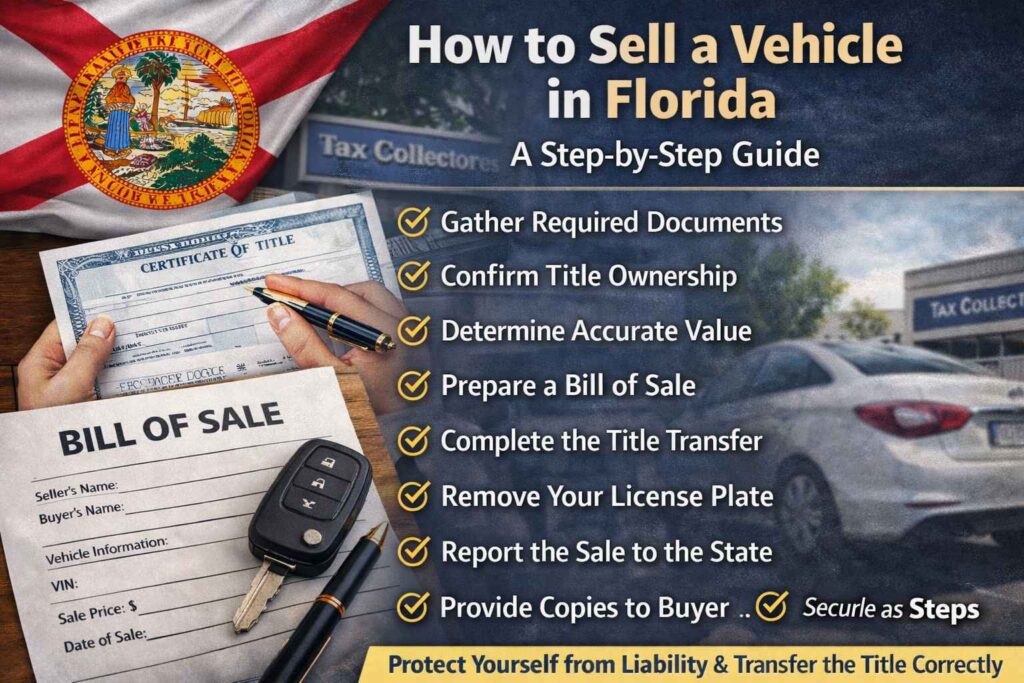
Florida Vehicle Sale: Two Separate 30-Day Deadlines
| Topic / Issue | [FLORIDA] Legal Rule | Governing Statute |
|---|---|---|
| Buyer title-transfer deadline | The purchaser must file the title-transfer application within 30 calendar days after delivery. A $20 late transfer fee applies. | Florida Statute § 319.23(6)(a) |
| Seller Notice of Sale deadline | The seller must notify the department within 30 days after the sale or transfer to satisfy the statutory notice requirement for limitation of liability. | Florida Statute § 319.22(2)(b) |
| Odometer requirement | For applicable vehicles, the required odometer disclosure must be completed as part of the transfer process. | Florida Statute § 319.225; 49 C.F.R. § 580.5 |
| Seller responsibility | The seller has a separate Notice of Sale responsibility after delivering the vehicle to the buyer. | Florida Statute § 319.22(2)(b) |
| Buyer responsibility | The buyer is responsible for submitting the title-transfer application within the statutory 30-day period. | Florida Statute § 319.23(6)(a) |
| Notice of Sale | The seller’s notice must contain the vehicle identification number, buyer’s full name, buyer identification, and other information required by the department. | Florida Statute § 319.22(2)(b) |
| Late buyer filing | Failure to file the title application within 30 days results in the statutory $20 fee, in addition to applicable fees and penalties. | Florida Statute § 319.23(6)(a) |
| Why both deadlines matter | The buyer’s title-transfer deadline and seller’s Notice of Sale deadline are separate obligations. Completing one does not eliminate the other. | Florida Statutes §§ 319.22(2)(b), 319.23(6)(a) |
A Florida vehicle sale has two separate 30-day deadlines. The buyer must file the title application within 30 days after delivery, while the seller has a separate obligation to notify the department within 30 days after the sale or transfer. Florida’s current § 319.22 expressly establishes the seller’s notice requirement.
The buyer’s deadline also has a specific financial consequence. Under § 319.23, failing to file within the required period results in a $20 fee, in addition to other applicable fees and penalties.
This distinction matters because a seller should not assume that the buyer’s title application completes the seller’s post-sale responsibilities. The seller should separately handle the Notice of Sale, while the buyer handles the title application.
Step 1: Gather the Required Documents
Before listing your vehicle for sale, make sure you have:
- The original vehicle title
- A valid government-issued ID
- Current odometer reading
- Vehicle lien release (if applicable)
If the title is lost, you must apply for a duplicate through the
Florida Department of Highway Safety and Motor Vehicles before completing the sale.
Step 2: Confirm the Title Is in Your Name
You can only legally sell a vehicle if:
- The title is in your name, and
- There are no active liens
If there is a lien, it must be paid off and officially released before the sale.
Step 3: Determine the Vehicle’s Value
To price your vehicle correctly:
- Check similar listings in Florida
- Consider mileage, condition, and accident history
- Use valuation tools for a fair market range
Setting the right price helps the sale move faster and prevents tax scrutiny for an unrealistically low amount.
Step 4: Prepare a Bill of Sale
While not always legally required, a Florida vehicle bill of sale is strongly recommended.
It should include:
- Buyer and seller full names and addresses
- Vehicle details (VIN, make, model, year)
- Sale price
- Date of sale
- Odometer reading
- Signatures of both parties
This document protects you if the buyer delays title transfer or receives tickets after the sale.
Step 5: Complete the Title Transfer
On the title, you must:
- Fill in the buyer’s name and address
- Record the odometer reading
- Enter the sale price
- Sign as the seller
Any mistakes or cross-outs can void the title, so write clearly and use black or blue ink.
Florida Electronic Title Transfer: You May Not Need a Paper Title
Florida allows the Department to use electronic or telephonic means for certain motor-vehicle title transactions. This matters when the seller does not have a paper certificate readily available but the vehicle has an electronic title record. The existence of an electronic title does not remove the buyer’s obligation to complete the required title-transfer process.
For a seller, the practical step is to confirm the vehicle’s title status before handing over the vehicle. If the title is electronic, the parties may need to complete the transfer through an authorized Florida title service, tax collector’s office, or other department-approved process rather than simply signing a paper certificate.
This can prevent a common problem: a buyer and seller agree on the sale, sign a bill of sale, and then discover that there is no paper title to sign. The bill of sale documents the transaction, but it does not by itself replace the state’s title-transfer process.
The article should mention this option because it changes what the seller needs to bring to the transaction and prevents the mistaken assumption that every Florida vehicle must have a physical paper title available at the time of sale.
Step 6: Remove Your License Plate
In Florida:
✅ The plate stays with the seller — not the vehicle
You can:
- Transfer it to another car, or
- Return it to a tax collector’s office
This step is critical to avoid tolls, red-light tickets, or legal responsibility after the sale.
Step 7: Report the Sale to the State
You should file a Notice of Sale with the Florida DMV.
This officially records that:
- You no longer own the vehicle
- You are not responsible for future violations
This is one of the most important liability protection steps — and many private sellers skip it.
Step 8: Provide Copies to the Buyer
Give the buyer:
- Signed title
- Bill of sale
- Lien release (if applicable)
Keep copies of everything for your records.
Step 9: Cancel or Transfer Insurance
Once the sale is complete:
- Remove the vehicle from your insurance policy
- Or transfer coverage to your new vehicle
Do not cancel insurance before the sale is finalized.
Step 10: Safely Receive Payment
Best payment methods:
- Cash (in a safe public place)
- Cashier’s check (verify with the bank)
- Secure digital transfer
Avoid:
- Personal checks
- Payment plans with strangers
Always complete the paperwork at the same time payment is received.
Common Mistakes to Avoid
Many Florida vehicle sellers run into problems because they:
❌ Forget to notify the DMV
❌ Leave the license plate on the car
❌ Accept payment without signing the title
❌ Do not keep copies of documents
❌ Skip the bill of sale
These mistakes can lead to fines, legal disputes, and tax complications.
Do You Have to Go to the DMV With the Buyer?
Not necessarily.
A private vehicle sale in Florida can be completed without visiting the DMV together, as long as:
- The title is properly signed
- The buyer submits the paperwork on time
However, meeting at a tax collector’s office can make the process safer for both parties.
What Happens After the Sale?
The buyer has 30 days to:
- Transfer the title
- Register the vehicle
- Pay sales tax
Your Notice of Sale protects you if the buyer delays this step.
Final Checklist for Florida Vehicle Sellers
Before handing over the keys:
✔ Title completed correctly
✔ Bill of sale signed
✔ License plate removed
✔ Payment received
✔ Notice of Sale submitted
✔ Copies saved
Following this checklist ensures the transaction is legally complete.
Final Thoughts
Selling a vehicle in Florida is simple when you follow the correct process. The key is proper documentation, accurate title transfer, and notifying the state once the sale is complete.
Taking these steps protects you from future liability and ensures a smooth, legally compliant transaction for both buyer and seller.
Frequently Asked Questions
Do I need a bill of sale to sell a car in Florida?
A bill of sale is not always legally required in Florida, but it is strongly recommended. It provides written proof of the sale, including the date, purchase price, and buyer’s details. This document protects the seller from future liability if the buyer delays transferring the title or receives tickets after the sale.
Do license plates stay with the car when sold in Florida?
No. In Florida, the license plate stays with the seller — not the vehicle. You can transfer the plate to another vehicle or return it to your local tax collector’s office. Removing the plate helps protect you from toll violations, parking tickets, and legal responsibility after the sale.
How do I transfer a car title to a buyer in Florida?
To transfer a title in Florida, the seller must complete the assignment section on the title by entering the buyer’s name, sale price, date of sale, and odometer reading, then signing it. The buyer must submit the signed title to the Florida DMV (tax collector’s office) to complete registration and pay applicable taxes and fees.
Do I have to notify the Florida DMV after selling my car?
Yes. You should file a Notice of Sale with the Florida Department of Highway Safety and Motor Vehicles. This officially records that you no longer own the vehicle and protects you from future liability if the buyer fails to register it.
Can I sell a car in Florida without going to the DMV with the buyer?
Yes. A private vehicle sale can be completed without visiting the DMV together if the title is properly signed and all required documents are provided to the buyer. However, meeting at a tax collector’s office can make the transaction safer and faster.
What documents does a seller need to sell a car in Florida?
To sell a car in Florida, the seller typically needs:
- The original vehicle title
- A valid ID
- Odometer reading
- Lien release (if applicable)
- A bill of sale (recommended)
How long does the buyer have to transfer the title in Florida?
The buyer has 30 days to transfer the title and register the vehicle in Florida. If they fail to do so, late fees may apply. Filing a Notice of Sale protects the seller during this period.
Is it better to accept cash or a check when selling a car privately?
Cash or a verified cashier’s check is the safest payment method for a private vehicle sale in Florida. Personal checks and payment plans carry higher risk and should generally be avoided.
Do I need to cancel my insurance after selling my car?
Yes. Once the sale is complete and the vehicle is no longer in your possession, you should remove it from your insurance policy. Do not cancel your insurance before the transaction is finalized.
Can I sell a car in Florida if I still have a loan on it?
Yes, but the loan must be paid off and the lien released before ownership can be transferred. Most sales involving a lien are completed at a bank or lender’s office to ensure the title is properly cleared.

Alexander Nobregas, Esq.
Florida Attorney & Legal Documentation Specialist
Alexander Nobregas is a licensed attorney based in Florida, United States, focusing on consumer law, property transfers, and legal documentation. He has extensive experience helping Florida residents navigate private sales, title transfers, DMV requirements, and ownership verification issues.
Through BillofSaleFlorida.com, Alexander provides clear, accurate, and practical guidance on bills of sale and Florida compliance rules—making legal processes easier for everyday buyers and sellers. His articles are based on real-world cases, Florida Statutes, and years of hands-on legal experience.