![Bill of Sale Florida For Car, Vehicle [Edit & Printable] PDF](https://billofsaleflorida.com/wp-content/uploads/2025/11/cropped-Bill-of-sale-florida-logo-160x74.png)
If you’re selling or buying a trailer in Florida—whether it’s a boat trailer, utility trailer, or cargo hauler—you’ll need the correct paperwork to avoid legal issues. A trailer bill of sale Florida document plays an important role in proving ownership and completing registration with the Florida Tax Collector.
A bill of sale is more than a simple receipt. It confirms the transfer of ownership and protects both the buyer and seller. In my legal practice, I often assist clients who need a Florida bill of sale for trailer, and most delays happen because people don’t know what Florida law requires.

Whether you’re drafting a Florida bill of sale trailer, preparing a bill of sale for trailer in Florida, or completing a bill of sale for trailer in Florida, this guide will help you understand the legal process clearly and correctly—based on Florida Statutes and FLHSMV rules.
Free Trailer Bill of Sale Florida Templates
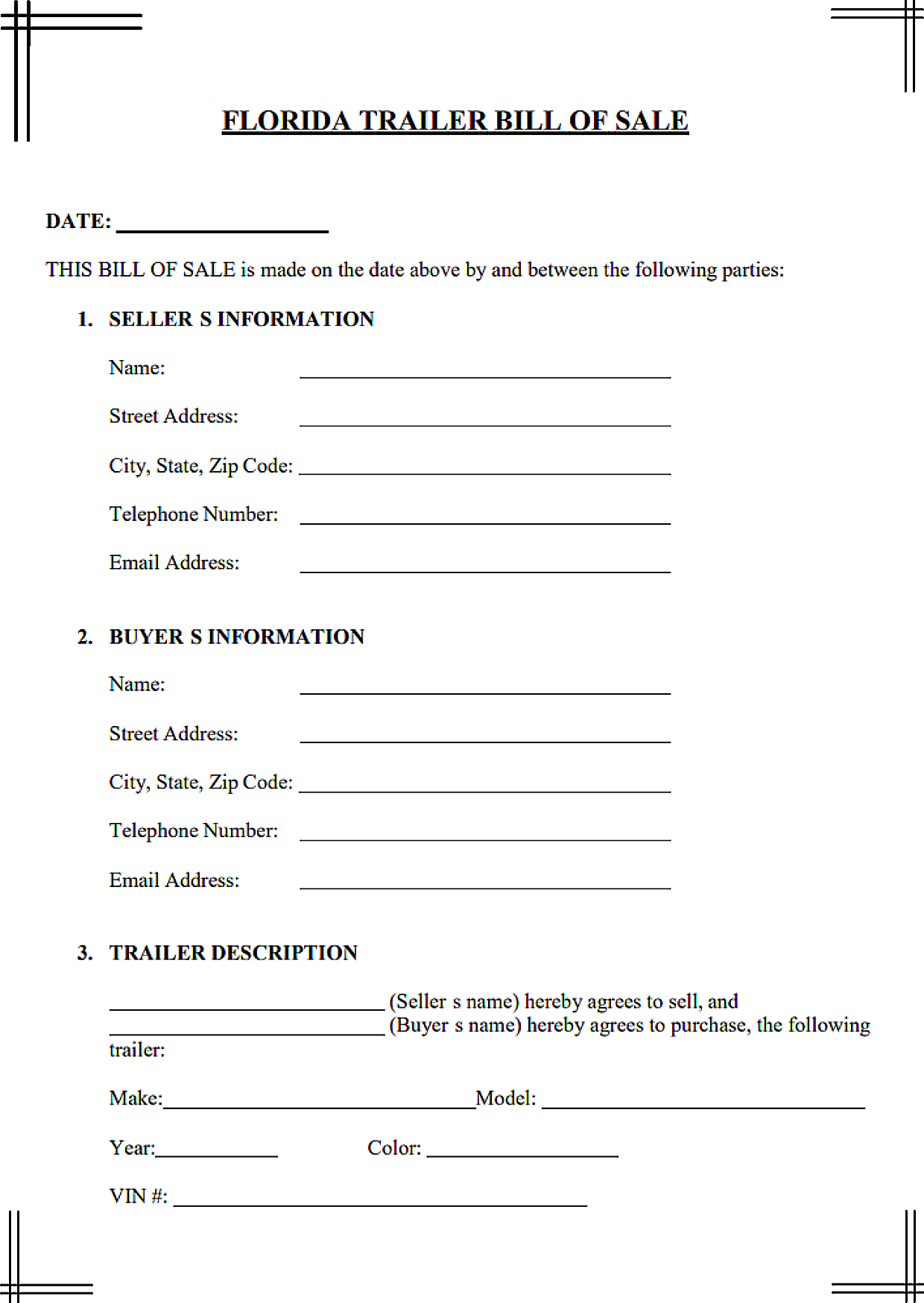
If you’re buying or selling a trailer in Florida, having a clear, legally useful Trailer Bill of Sale is essential. To make your work easier, I’ve created Free Trailer Bill of Sale Florida Templates that you can download instantly. I’ve included both PDF and Word formats, so you can choose whichever version you prefer and customize it without any hassle. These templates follow Florida’s requirements and help you complete your transaction with confidence and accuracy.
Florida Trailer Bill of Sale Legal Requirements
| Topic / Issue | FLORIDA Legal Rule | Governing Statute |
|---|---|---|
| 2,000-lb Titling Threshold | Trailers weighing 2,000 lbs or more must be titled. Trailers under 2,000 lbs are registration-only. | Florida Statute § 319.20 |
| Buyer Registration / Title Deadline | The purchaser must register or transfer title within 30 calendar days after purchase or delivery. | Florida Statute § 319.23(6)(a); § 320.02 |
| Bill of Sale and Title | For a titled trailer, the assigned Certificate of Title must accompany the Bill of Sale when completing the title and registration transfer. | Florida Statute § 319.23 |
| Seller Notice of Sale | A seller of a titled trailer should file the Notice of Sale within 30 days to extinguish civil liability. | Florida Statute § 319.22 |
| Homemade Trailer | A Bill of Sale serving as primary proof of origin for an unregistered homemade trailer must detail the year built, empty net weight, and construction materials. | FLHSMV administrative rules |
| Unsatisfied Lien | A seller cannot convey clear, marketable title for a 2,000-lb-or-more trailer without satisfying and releasing existing security interests. | Florida Statute § 319.27 |
| Physical VIN Verification | Trailers under 2,000 lbs are exempt from the mandatory physical VIN verification identified in the supplied Florida provisions. | Florida Statute § 319.23(3)(a); § 320.02(3) |
| License Plate | The trailer plate belongs to the person, not the trailer. The seller must remove and retain or surrender it before transferring possession. | Florida Statute § 320.0609 |
| Sales Tax | Florida imposes 6% state sales tax, with county surtax based on the buyer’s residence address and capped at the first $5,000. | Florida Statute § 212.05; § 212.054 |
| Odometer Rules | Federal odometer disclosure laws apply to self-propelled motor vehicles, not trailers. | 49 C.F.R. Part 580 |
The 2,000-lb net-weight threshold is the most important Florida-specific distinction because it determines whether a trailer must be titled or is registration-only. A trailer weighing less than 2,000 lbs does not receive a certificate of title under the supplied rules, while a trailer weighing 2,000 lbs or more falls under Florida’s title requirements.
The filing process also changes according to that weight. For a trailer under 2,000 lbs, the buyer presents the Bill of Sale to the County Tax Collector’s Office to obtain the license plate and registration certificate. For a trailer weighing 2,000 lbs or more, the assigned Certificate of Title and Bill of Sale must be filed with the County Tax Collector’s Office or FLHSMV, along with Form HSMV 82040.
The 30-day deadlines also matter in an actual private sale. The buyer must register or transfer title within 30 days, while the seller of a titled trailer should submit the Notice of Sale within 30 days. An unresolved lien can prevent clear, marketable title, and the seller must also remove the trailer’s license plate before transferring possession.
Bill of Sale for Boat and Trailer in Florida

Buying or selling a boat and trailer in Florida comes with a few important legal steps, and the Bill of Sale is one of the most essential documents you’ll need. It protects both the buyer and the seller, proves ownership, and helps you meet the requirements of the Florida Highway Safety and Motor Vehicles (FLHSMV). In Florida, a proper Bill of Sale must clearly list details for both the boat and the trailer, including the HIN, VIN, sale price, and registration information.
To make things easier for you, I’ve also included both PDF and Word formats, so you can download whichever version you prefer and use it instantly.
Florida Trailer Bill of Sale Form

A Florida Trailer Bill of Sale Form is an essential document that protects both the buyer and the seller during the sale of a trailer—whether it’s a utility trailer, boat trailer, cargo trailer, or any other type used in Florida. This form records the details of the transaction, proves ownership transfer, and helps you meet FLHSMV requirements when registering or titling a trailer.
To make things easier for you, I’ve also added this form in both PDF and Word formats, so you can download whichever version you prefer and fill it out quickly without any confusion.
Bill of Sale for a Vessel Trailer Florida

If you’re buying or selling a vessel trailer in Florida, a proper Bill of Sale is essential to protect both the buyer and the seller. It records the trailer’s details, proves ownership transfer, and helps you meet Florida’s title and registration rules. Many Florida residents don’t realize that even boat trailers must follow specific documentation steps under FLHSMV guidelines, and a clear Bill of Sale prevents future disputes or registration delays.
To make this process easier for you, I’ve included both a PDF and a Word (DOCX) version of the Florida Vessel Trailer Bill of Sale, so you can download whichever format you prefer.
Bill of Sale for Jet Ski and Trailer Florida

Bill of Sale for Utility Trailer in Florida

What is a Bill of Sale in Florida?
A Bill of Sale is a written document that records the transfer of ownership of personal property—including trailers—from a seller to a buyer. In Florida, this document can serve as proof of purchase, evidence of payment, and verification of key trailer details.
Florida Statutes Reference
-
Florida Statute §319.23 – Covers title application requirements for motor vehicles and trailers.
-
Florida Statute §319.27 – Addresses liens and ownership interests on vehicles/trailers.
While Florida doesn’t have a “Bill of Sale statute,” these laws govern titling and registration requirements, which a Bill of Sale directly supports.
Is a Bill of Sale Required in Florida?
In my legal practice, this is one of the most common questions I receive.
When Is a Bill of Sale Mandatory?
A trailer bill of sale is required in Florida when:
-
The trailer is 2,000 lbs or more and requires a title under FLHSMV rules.
-
You are registering a homemade trailer, in which case FLHSMV requires a detailed bill of sale with construction materials and costs.
-
There is no previous title available, and the bill of sale is being used to establish ownership.
-
You are buying from a private seller, and the FLHSMV clerk requests it for tax or ownership verification
When Is It Optional?
It may be optional when:
-
The trailer is under 2,000 lbs (non-titled) AND a valid registration is already available.
-
A Florida title with the completed “Transfer of Title” section is already being submitted.
However, even when optional, I strongly recommend always using a bill of sale. It protects both sides from future disputes.
Step-by-Step Process to Complete a Bill of Sale
Step 1 — Gather Buyer and Seller Information
Include:
-
Legal names
-
Addresses
-
Phone or email contact
This may seem simple, but missing address details are a frequent issue I see with private-party sales.
Step 2 — Provide Trailer Details
Include:
-
Year
-
Make
-
Model
-
Body type
-
GVWR (especially important for titled trailers)
-
VIN (Vehicle Identification Number) – mandatory under Florida rules
-
Axles / dimensions (recommended)
Step 3 — Purchase and Payment Information
State:
-
Sale price
-
Date of sale
-
Payment method (cash, check, electronic transfer)
-
Whether the transaction is “as-is” or includes warranties
Step 4 — Odometer Reading (If Applicable)
Most trailers do not have odometers, but if one exists (such as on certain RV utility trailers), include the reading.
In my practice, sellers often forget this detail, which FLHSMV may ask about.
Step 5 — Signatures
Both buyer and seller must sign.
A notary is optional, but highly recommended for higher-value sales or whenever ownership could be questioned.
Who Should Sign a Florida Trailer Bill of Sale?
The person signing a Florida Trailer Bill of Sale depends on whether the trailer is titled. For a trailer weighing 2,000 lbs or more, the supplied Florida rules treat it as a titled trailer. If multiple owners appear on the title and their names are joined by “AND,” all titled owners must sign. If the names are joined by “OR,” either owner may sign.
The rule is different for a trailer weighing less than 2,000 lbs because it is not subject to mandatory titling under the supplied facts. For that type of trailer, the Bill of Sale may be signed by the registered owner or lawful possessor.
This distinction is worth checking before the parties sign. Using the wrong person as the seller can create questions about whether the person actually had authority to transfer the trailer. I would therefore check the trailer’s weight and existing ownership paperwork first, then make sure the appropriate owner or possessor signs the Bill of Sale.
The supplied research does not identify a statutory witness or notarization requirement, so those should not be presented as mandatory requirements.
Key Legal Requirements for a Trailer Bill of Sale in Florida
VIN Requirement
Florida requires the VIN for:
-
Registration
-
Titling
-
Law enforcement verification
If the VIN is missing or unreadable, FLHSMV may require an inspection.
Odometer Disclosure
Not typically required for trailers, but federal rules apply only to motor vehicles—not trailers.
Notarization
Not required by statute, but may prevent future disputes.
Florida Tax Collector Submission
Most counties require:
-
Bill of sale
-
Title (if over 2,000 lbs)
-
Registration application (HSMV 82040)
-
Fees and taxes
Always check with your local County Tax Collector because minor variations in procedure exist.
Example or Template of a Florida Trailer Bill of Sale
Sample Layout (Text Version)
Below is a simple Florida-compliant structure:
FLORIDA TRAILER BILL OF SALE
1. Seller Information:
Name:
Address:
Phone/Email:
2. Buyer Information:
Name:
Address:
Phone/Email:
3. Trailer Details:
Year:
Make:
Model:
Color:
VIN:
Weight (GVWR):
Description:
4. Sale Information:
Sale Price: $________
Date of Sale: __________
Payment Method: __________
Sold As-Is (Yes/No): __________
5. Signatures:
Seller Signature: ____________________
Buyer Signature: ____________________
Notary (Optional)
Common Errors or Legal Pitfalls
Mistakes I See Most Often
-
Forgetting the VIN, which will cause immediate issues at FLHSMV.
-
Listing the wrong sale date, affecting sales tax liability.
-
Not stating “as-is” when the seller intends no warranties.
-
Using an incomplete handwritten bill of sale that FLHSMV rejects.
-
Failing to keep a copy for personal records.
In Florida, a clean, detailed bill of sale can prevent months of legal headaches.
FAQs
Do I need a title for my trailer in Florida?
Yes, if it weighs 2,000 lbs or more, you must title it under Florida Statute §319.23.
Does my trailer need a VIN?
Yes. Almost all trailers in Florida require a VIN. Homemade trailers must get one assigned by FLHSMV.
Do I need to notarize the Bill of Sale?
Not required, but helpful for proof of authenticity.
Can I register a trailer without a title?
Only if it’s under 2,000 lbs OR if you have sufficient proof of ownership, which often includes a detailed bill of sale.
Is sales tax due on private trailer sales?
Yes—Florida requires payment of tax based on the purchase price at the Tax Collector office.
Conclusion
A Florida Trailer Bill of Sale may seem like a simple document, but it plays an essential role in proving ownership, protecting both parties, and complying with Florida law. With the right information, you can complete one confidently and avoid the legal issues I often see in my practice.
To make things easier, you can download your free Florida Trailer Bill of Sale template and customize it for your needs. It’s a quick way to ensure your sale meets Florida’s legal standards.
This article is for informational purposes only and does not constitute legal advice. For advice specific to your situation, consult a qualified attorney licensed in Florida.

Alexander Nobregas, Esq.
Florida Attorney & Legal Documentation Specialist
Alexander Nobregas is a licensed attorney based in Florida, United States, focusing on consumer law, property transfers, and legal documentation. He has extensive experience helping Florida residents navigate private sales, title transfers, DMV requirements, and ownership verification issues.
Through BillofSaleFlorida.com, Alexander provides clear, accurate, and practical guidance on bills of sale and Florida compliance rules—making legal processes easier for everyday buyers and sellers. His articles are based on real-world cases, Florida Statutes, and years of hands-on legal experience.